

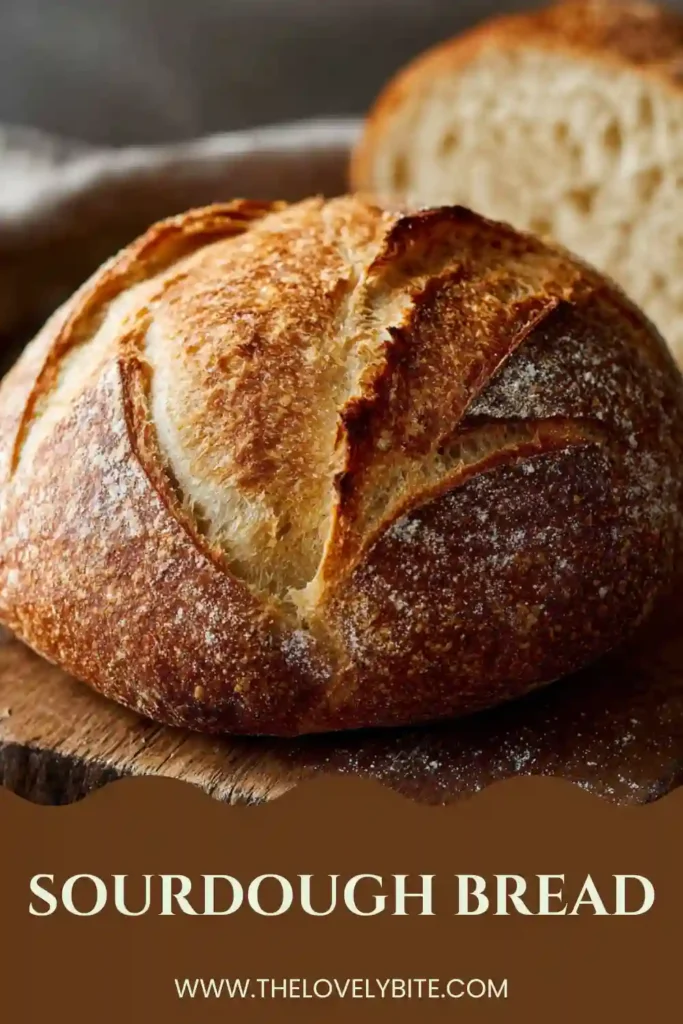
If you’ve always wanted to master homemade sourdough, this beginner-friendly Sourdough Bread recipe is the perfect place to start. With a crisp golden crust, chewy interior, and rich tangy flavor, this loaf delivers bakery-quality results using simple pantry ingredients and an active sourdough starter.
Why You’ll Love This Recipe
- Easy enough for beginner bakers
- Crispy crust with a soft, chewy center
- Simple ingredients with no commercial yeast
- Flexible fermentation times for different seasons
- Great for sandwiches, toast, or serving alongside soups
- Naturally fermented for deep flavor and texture
Ingredients

- 150g bubbly active sourdough starter
- 250g warm water
- 25g olive oil
- 500g bread flour
- 10g fine sea salt
- Fine ground cornmeal or parchment paper
Instructions
Make the Dough
In a large bowl, combine the sourdough starter, warm water, and olive oil. Mix with a fork until blended. Add the bread flour and sea salt. Continue mixing until the dough becomes stiff, then use your hands to fully incorporate the flour. The dough will look rough and shaggy.
Cover the bowl with plastic wrap or a damp kitchen towel and let it rest for 30 minutes to 1 hour.
After resting, shape the dough into a rough ball for about 15 seconds.
Bulk Rise (First Rise)
Cover the bowl with lightly oiled plastic wrap and place it in a warm area between 70–75°F. Let the dough rise until it almost doubles in size and no longer looks dense.
- Summer rise time: approximately 2–4 hours at 80°F
- Winter rise time: approximately 10–12 hours at 68°F
Watch the dough rather than the clock for best results.
Optional Stretch & Fold
About 30–45 minutes into bulk fermentation, perform a stretch and fold:
- Lift one side of the dough
- Stretch upward
- Fold over itself
- Rotate the bowl and repeat
Complete 1 full set, then repeat 1–2 more times about 1 hour apart.
Shape the Dough
Transfer the dough to a lightly floured surface. Fold the dough inward from all sides toward the center. Flip seam-side down and gently rotate to create surface tension and form a tight ball.
Second Rise
Line a Dutch oven with parchment paper or dust with cornmeal. Place the dough inside, cover, and let rise for 30 minutes to 1 hour until slightly puffy.
Preheat the oven to 450°F (232°C).
If using more than 250g water, use a floured proofing basket instead of a free-form rise to help maintain shape.
Score the Dough
Using a bread lame, razor blade, or sharp knife, make a shallow 2–3 inch slash about ¼-inch deep on top of the dough.
Bake the Dough
Place the covered Dutch oven on the center rack and reduce the oven temperature to 400°F (204°C).
- Bake covered for 20 minutes
- Remove the lid
- Bake uncovered for another 40 minutes until deep golden brown
The internal temperature should reach 205–210°F (96–98°C).
Cool the sourdough bread on a wire rack for at least 1 hour before slicing.
Tips & Tricks
- Use a digital kitchen scale for accuracy
- Bread flour produces better structure than all-purpose flour
- Higher hydration dough (300–325g water) creates a softer crumb
- Let dough rest longer between folds if it resists stretching
- Avoid over-flouring while shaping to maintain surface tension
- A Dutch oven helps create bakery-style steam for crust development
Details
- Prep Time: 20 minutes
- Rest & Rise Time: 4–12 hours
- Cook Time: 1 hour
- Total Time: 5–13 hours
- Yield: 1 loaf
- Category: Bread
- Method: Baking
- Cuisine: American
- Difficulty: Beginner to Intermediate
- Dietary Notes: Vegetarian

Notes
- King Arthur Bread Flour, Gold Medal Bread Flour, and Pillsbury Bread Flour all work well
- Use parchment paper for easier cleanup
- For a softer loaf, increase water slightly
- Serve with butter, soup, olive oil dips, or sandwiches
Nutrition (Approximate Per Slice)
- Calories: 180
- Protein: 6g
- Carbohydrates: 33g
- Fat: 3g
- Fiber: 1g
FAQ
Why is my sourdough dough too sticky?
Higher hydration doughs naturally feel sticky. Lightly flour your hands and work surface while handling.
Can I use all-purpose flour instead of bread flour?
Bread flour is recommended because it provides stronger gluten development and better structure.
How do I know when bulk fermentation is done?
The dough should appear airy, smoother, and nearly doubled in size.
Why didn’t my sourdough rise?
Your starter may not have been active enough, or the room temperature may have been too cold.
Can I refrigerate the dough overnight?
Yes. Cold fermentation develops deeper flavor and makes the dough easier to handle.
Do I need a Dutch oven?
A Dutch oven helps trap steam and creates a crisp crust, but you can also bake on a stone with steam added to the oven.
Storage
- Store at room temperature in a bread bag or wrapped in a towel for up to 3 days
- Freeze slices in an airtight bag for up to 2 months
- Reheat in a toaster or warm oven for best texture

Similar Recipes
- Sourdough Discard Raspberry Cream Cheese Danish
- Irresistible Sourdough Discard Cinnamon Bread Delight
Sourdough Bread: A Beginner’s Guide
Ingredients
- 150 g bubbly active sourdough starter
- 250 g warm water
- 25 g olive oil
- 500 g bread flour
- 10 g fine sea salt
- Fine ground cornmeal or parchment paper
Instructions
Make the Dough
- In a large bowl, combine the sourdough starter, warm water, and olive oil. Mix with a fork until blended. Add the bread flour and sea salt. Continue mixing until the dough becomes stiff, then use your hands to fully incorporate the flour. The dough will look rough and shaggy.
- Cover the bowl with plastic wrap or a damp kitchen towel and let it rest for 30 minutes to 1 hour.
- After resting, shape the dough into a rough ball for about 15 seconds.
Bulk Rise (First Rise)
- Cover the bowl with lightly oiled plastic wrap and place it in a warm area between 70–75°F. Let the dough rise until it almost doubles in size and no longer looks dense.
- Summer rise time: approximately 2–4 hours at 80°F
- Winter rise time: approximately 10–12 hours at 68°F
- Watch the dough rather than the clock for best results.
Optional Stretch & Fold
- About 30–45 minutes into bulk fermentation, perform a stretch and fold:
- Lift one side of the dough
- Stretch upward
- Fold over itself
- Rotate the bowl and repeat
- Complete 1 full set, then repeat 1–2 more times about 1 hour apart.
Shape the Dough
- Transfer the dough to a lightly floured surface. Fold the dough inward from all sides toward the center. Flip seam-side down and gently rotate to create surface tension and form a tight ball.
Second Rise
- Line a Dutch oven with parchment paper or dust with cornmeal. Place the dough inside, cover, and let rise for 30 minutes to 1 hour until slightly puffy.
- Preheat the oven to 450°F (232°C).
- If using more than 250g water, use a floured proofing basket instead of a free-form rise to help maintain shape.
Score the Dough
- Using a bread lame, razor blade, or sharp knife, make a shallow 2–3 inch slash about ¼-inch deep on top of the dough.
Bake the Dough
- Place the covered Dutch oven on the center rack and reduce the oven temperature to 400°F (204°C).
- Bake covered for 20 minutes
- Remove the lid
- Bake uncovered for another 40 minutes until deep golden brown
- The internal temperature should reach 205–210°F (96–98°C).
- Cool the sourdough bread on a wire rack for at least 1 hour before slicing.
Notes
- King Arthur Bread Flour, Gold Medal Bread Flour, and Pillsbury Bread Flour all work well
- Use parchment paper for easier cleanup
- For a softer loaf, increase water slightly
- Serve with butter, soup, olive oil dips, or sandwiches
Conclusion
Making homemade Sourdough Bread may seem intimidating at first, but this beginner-friendly method makes the process approachable and rewarding. With practice, you’ll develop confidence handling fermentation, shaping, and baking beautiful artisan loaves right in your own kitchen.